5 Consumer Products Anthropic Could Build Next
 Kazu
Kazu@daniel__designs just announced he is joining Anthropic's design team to work on consumer products. You do not recruit a consumer product designer if you are building a better chat window. Here is what actually fits the trajectory.
1. A Personal Memory Layer
Claude already reads your documents, emails, and files within a session. The gap is that it forgets everything the moment you close the tab.
The memory product closes that gap. A background service on iOS and Android, reading your calendar, messages, and notes with your permission, building a private model of your life that travels with you across every Claude conversation. Not a feature. A platform shift.
Anthropic already has Claude connected to Apple Health and Android Health Connect as of January 2026. That integration only makes sense as an opening move if something deeper is planned. A health-connected app with no persistent memory is half a product.
The reason Anthropic builds this before OpenAI is specific: safety positioning is a feature here, not a brand talking point. A memory product lives or dies on whether users trust the company holding their data. Anthropic's constitutional AI approach, its public posture on privacy, and its reputation with regulators give it a head start on earning that trust that no amount of marketing spend replaces.
2. A Voice Companion That Actually Reasons
Think of it as what Siri should have become in 2012.
Apple's Siri has spent a decade failing to get meaningfully smarter. Google Assistant is being folded into Gemini. Alexa peaked in 2019 and has been losing headcount ever since. The three dominant voice assistants are all retreating at the same time, leaving a gap that nobody has filled because filling it requires a model that can actually reason, not just retrieve.
Claude can reason. The product is an always-on voice layer: you talk, Claude handles the scheduling, research, drafting, or decision support, and the only visible surface is a subtle indicator that it heard you. Mike Krieger built Instagram on the insight that the right interface reduces friction to near zero. Applied to voice AI, that logic means the interface disappears entirely.
The differentiator is not the voice. Every phone has a microphone. The differentiator is that Claude will push back when your question does not make sense, hold context across a conversation, and tell you when it does not know something. That is a different category of product from anything currently in the market.
3. A Claude-Native Workspace
Notion, Obsidian, and Roam all start from the same assumption: documents are the unit of knowledge work. AI gets bolted on after the fact.
Anthropic could build from the opposite direction. A workspace where the AI is the architecture and the documents are the output. Every note, project, and meeting is queryable in natural language because Claude was there. When you ask it to surface the three decisions from last quarter that are now causing problems, it does that because it took the notes.
This is where the design hire matters most. A Claude workspace is not a chat interface with a sidebar. It requires a fundamentally different design language, one where the human and the AI share a canvas rather than exchange messages in a thread. That is a hard design problem. It is the kind of problem you hire @daniel__designs to solve.
Notion reached a $10B valuation on roughly 30 million users paying for a fundamentally passive tool. A workspace where the AI actively participates in the work is a meaningfully different value proposition at a meaningfully higher price.
4. An AI Health Coach
The Apple Health integration shipped in January 2026. The question is what it was for.
A standalone health data connection to a general-purpose chatbot is not a product. It is infrastructure for a product. The product is a health companion that reads your wearable data, knows your medical history with your consent, and gives you advice calibrated to your actual situation rather than the liability-hedged non-answers that every current health app defaults to.
The gap in the market is clinical honesty. WebMD tells you everything is possibly cancer. Current health apps tell you to drink more water. Neither is useful. A Claude health product trained to be epistemically honest about what it knows and does not know is a different thing entirely. It says "based on your HRV trend over the last 30 days and what you told me about your sleep, here is what I would watch." That is the product.
Digital health is a $660 billion industry. The company that earns clinical trust and consumer adoption at the same time has not been built yet.
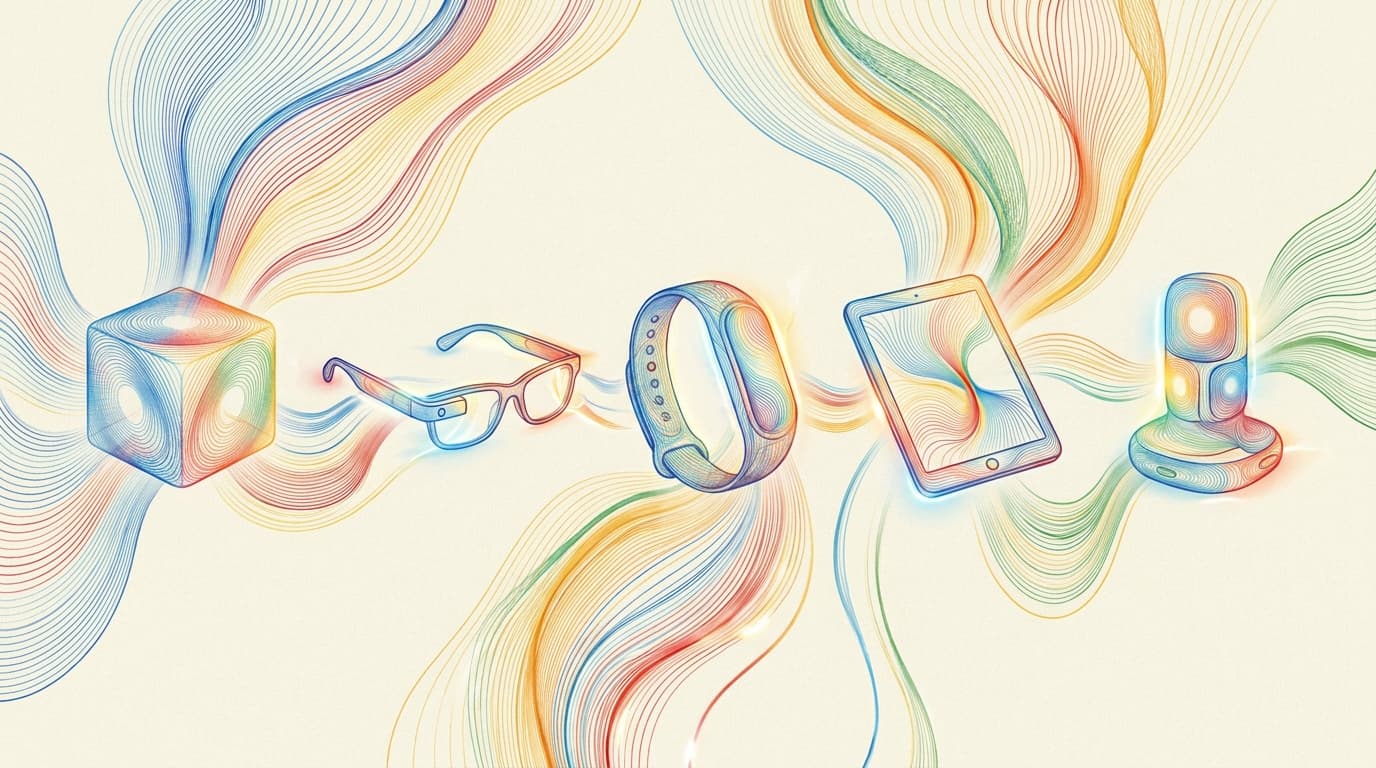
5. A Claude Device
This is the speculative one, and it is the most consistent with hiring a consumer product designer.
The Humane AI Pin failed because the software could not justify the hardware. The Rabbit R1 failed because a phone app did everything it did more cheaply. Both were hardware solutions looking for a software problem worth solving.
A Claude device built around persistent memory has a clear reason to exist. It is the ambient intelligence layer for your life: always available, deeply familiar with your context, connected to the cloud model for anything requiring serious reasoning. It does not replace your phone. It handles the things your phone is genuinely bad at, which is sustained attention, proactive awareness, and long-horizon help.
Amazon spent roughly $10 billion building Alexa and got a speaker that sets timers. The gap between what Alexa promised and what it delivered was a reasoning problem. Anthropic is the company that solved the reasoning problem. The device is the last thing it needs.
The design language Anthropic has built around Claude is already distinctive: warm, considered, slightly abstract. A physical form for that language is not a stretch. It is the next logical step.
The Moat Is the Product
Every prediction above requires one thing the other AI labs cannot easily replicate: a user base that trusts the company holding their most sensitive data.
Memory of your life. Ambient listening. Health records. Clinical advice. These are not features you adopt from a company you are ambivalent about. They require a level of trust that Anthropic has been building for six years through safety research, constitutional AI, and a public posture that consistently prioritizes user interests over growth metrics.
The design hire is not about making Claude prettier. It is the signal that Anthropic has decided that moat is ready to become a product line.